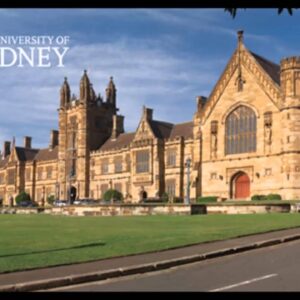
Introduction
Dreaming of medicine at Oxford? You’re not alone. Every year, ambitious students from Africa and Asia plan for entrance to one of the world’s most prestigious medical schools. But tuition, living costs, and international travel can make an Oxford degree feel out of reach. The good news: Oxford offers a range of scholarships that can cover tuition and living costs — some are fully funded — for both undergraduate medical degrees and graduate medical science programs. This guide walks you through the most relevant fully funded routes for MBBS (BM BCh) and postgraduate medical study in 2025, compares options clearly, explains application strategy, and gives practical tips tailored to African and Asian applicants.
Two quick notes before we start:
-
When we say “MBBS” at Oxford, the undergraduate medical degree is officially the BM BCh (the route and requirements below reflect Oxford’s current course structure). See the course overview on Oxford’s site.
-
I link directly to two authoritative Oxford pages below to make your next steps painless: the Reach Oxford undergraduate scholarship page and the Clarendon graduate scholarships page (these are placed in-context where they’re most useful).
Why fully funded medicine scholarships matter for Africa & Asia
A medical degree from Oxford can supercharge a career: academic medicine, leadership in public health, research, and high-impact clinical practice. For students in Africa and Asia, the barriers are often financial rather than academic. Fully funded scholarships change the equation — they allow talented students to train at world-class facilities and return home (or work internationally) with new skills that can transform health systems.
Beyond money, many Oxford scholarships prioritize applicants who plan to use their expertise to improve health outcomes in developing contexts. That alignment means you don’t just win funding — you join communities and leadership programs that help you convert study into impact.
Oxford University Fully Funded Medicine Scholarships 2025
Below are the most relevant fully funded or near-fully funded routes for medicine at Oxford in 2025, grouped by level of study.
Undergraduate (MBBS / BM BCh) — Reach Oxford Scholarships
Oxford colleges sometimes offer Reach Oxford scholarships to academically outstanding students from low-income countries who would otherwise be unable to study in the UK. These scholarships can cover tuition, college and residence fees, and provide a living stipend; in some cases travel is included. Reach Oxford is specifically oriented toward undergraduate students who meet the eligibility conditions. If you intend to apply for Oxford’s BM BCh (the six-year medicine course) you should examine Reach Oxford for 2025 entry as part of your planning.
Practical point: Reach Oxford awards are offered by individual colleges and the availability varies by college and year. Apply for your medicine course via UCAS and check the Reach Oxford page for college-specific details.
Graduate (Master’s, DPhil, Medical Sciences) — Clarendon & Weidenfeld-Hoffmann
For postgraduate medical study — MSc, MPhil, DPhil (PhD) in Medical Sciences or related fields — two scholarship routes are central:
-
Clarendon Fund — Awarded across the University of Oxford to outstanding graduate applicants; covers tuition and a generous living allowance; you are automatically considered when you apply for a graduate degree by the relevant course deadline. Clarendon supports hundreds of scholars annually from many countries, including across Africa and Asia.
-
Weidenfeld-Hoffmann Scholarships & Leadership Programme — Aimed at students from developing and emerging economies; covers full fees and a stipend and pairs the scholarship with a leadership development program and mentoring. It’s particularly suited to applicants who want both academic training and a leadership focus when they return to work in their home countries.
Other graduate opportunities (Rhodes, college-specific grants, external fellowships) also exist and can sometimes be combined with departmental funding.
Comparison at a Glance — Table of Key Scholarship Features
| Scholarship / Route | Level | Typical Coverage | Who it suits | Application notes (deadlines + routing) |
|---|---|---|---|---|
| Reach Oxford (Oxford central page) | Undergraduate (BM BCh eligible) | Tuition + college/residence + living grant (varies by college) | High-achieving students from qualifying low-income countries who cannot study at home | Apply to Oxford via UCAS; check college pages and Reach Oxford info early. |
| Clarendon Fund (Oxford central page) | Graduate (MSc / MPhil / DPhil) | Full fees + living allowance | Outstanding graduate applicants across disciplines (automatic consideration) | Apply to your graduate course by the course deadline (Dec/Jan). No separate Clarendon form. |
| Weidenfeld-Hoffmann | Graduate (mainly Masters / some MPhil) | Full tuition + living grant + leadership programme | Candidates from developing/emerging economies with leadership potential | Apply via Oxford graduate admissions; check WHT deadlines and specific course lists. |
| College bursaries & waivers | UG & Grad | Partial/Full fees, means-tested support | Students with financial need; varies by college | Apply to your college and the central bursaries system; rules differ. |
| External / national awards (e.g., Rhodes) | Graduate | Comprehensive packages | Exceptional leadership, academic record | Separate application (Rhodes has national nomination processes). |
Deep Dive: Undergraduate MB BCh (Oxford Medicine) — What applicants must know
Course basics & entry requirements
-
Oxford’s standard medicine pathway leads to the BM BCh degree (6 years). Entry is highly competitive. Requirements include top academic grades (A*AA typical for A-level applicants), strong performance in required subjects (Chemistry plus another science/maths), and the UCAT admissions test. Shortlisted candidates are interviewed (often with medical-style questions).
Where Reach Oxford fits
-
Reach Oxford is intended for students who could not otherwise study in their own countries for political or financial reasons. Colleges may offer a small number of awards each year; competition is high and availability varies by college. Apply to your chosen college via UCAS and make your financial/eligibility case clear in the application and supporting statements.
Practical tips for African & Asian applicants (UG)
-
Academic preparation: Aim for grades that meet or exceed published entry requirements. If your syllabus differs from A-levels, check the international qualification equivalences on Oxford’s site early.
-
Admissions test: Register for the UCAT in good time; strong UCAT performance is essential.
-
Personal statement: Demonstrate both academic readiness and sustained, meaningful exposure to healthcare (volunteering, community health initiatives, clinical research, shadowing if possible). Link ambitions to impact back home.
-
Interview prep: Practice clinical reasoning, ethical scenarios, and communication under time pressure. Use mock interviews and panels where possible.
-
Funding case: For Reach or any college bursary, be explicit about why study at home is not feasible, and document financial circumstances carefully.
Postgraduate Medicine & Medical Sciences — How to choose the right scholarship route
Clarendon: the “automatic” first stop
For most master’s and doctoral applicants in medical sciences, Clarendon is the most straightforward — apply for your course by the relevant deadline and the University considers you automatically. Clarendon awards emphasize academic excellence, so your research proposal, references, and prior record must stand out.
Weidenfeld-Hoffmann: leadership + funding
If you’re from an emerging economy and want a scholarship that combines finance and leadership development, Weidenfeld-Hoffmann is specifically designed for that. The programme actively seeks candidates who plan to return and lead change in their countries. The award typically covers fees and a living stipend and runs alongside a leadership curriculum.
Departmental & college scholarships — combine when possible
Many departments and colleges offer smaller but cumulative awards (departmental studentships, college scholarships, or research grants). For PhD candidates, supervisors may have grant funding that contributes to stipends or research costs. Don’t assume only one award applies — research every available avenue.
How to Build a Competitive Application
1) Choose the right course and supervisor (grad)
-
For research degrees, identify potential supervisors whose work aligns with yours. Reach out with a short, well-crafted email referencing recent publications and a clear research idea.
2) Statement of Purpose / Personal Statement
-
Structure: Open with motivation; show academic background and research experience; end with a clear impact statement explaining how Oxford ties into your future plans for Africa/Asia.
-
Length & tone: Concise, evidence-based, and personal. Avoid generic platitudes; use concrete examples of leadership and outcomes.
3) References that add weight
-
Choose referees who can speak to your research potential and character — clinical supervisors, research mentors, or academic tutors who can provide specific examples.
4) Evidence of impact & return to home country
-
Many emerging-economy scholarships reward applicants demonstrating a credible plan to use their training for public benefit. Outline specific programs, hospitals, research networks, or policy goals you aim to join.
5) Interview & assessment prep
-
Practice viva-style Q&A for DPhil candidates and medical interview scenarios for MB BCh applicants. Be ready to explain methodology, ethics, and how you’ll handle the stresses of clinical training.
Common Mistakes Applicants Make
-
Applying late / missing the correct deadline: For Clarendon you must apply by the course deadline (often Dec/Jan). For Reach Oxford, check UCAS and college specifics early.
-
Generic personal statements: Tailor every application to course and scholarship.
-
Weak references: Avoid referees who offer praise without detail.
-
No plan for impact: For scholarships aimed at emerging economies, a vague “I’ll help my country” line is weaker than a specific plan.
-
Overlooking English language nuts & bolts: Oxford requires proof of English proficiency unless exempt; budget time for tests and results.
Real-World Examples & Scenarios
Here are practical scenarios to illustrate routes for students from Africa and Asia.
Scenario A — Undergraduate applicant from Kenya (MB BCh)
-
Path: Apply via UCAS to the BM BCh, sit UCAT, prepare for interview. Apply for Reach Oxford through eligible colleges. Gather documents (financial evidence, references) to establish need. If successful, Reach could cover tuition and provide a living grant; otherwise, college bursary options remain.
Scenario B — Master’s applicant from India (Public Health / Medical Sciences)
-
Path: Apply for MSc in Global Health Science. Ensure application is in by the December/January deadline to be considered for Clarendon. Simultaneously, research whether the Weidenfeld-Hoffmann programme covers your specific course and if you meet its leadership criteria. Clarendon could remove tuition barriers; Weidenfeld adds leadership training.
Scenario C — PhD candidate from Nigeria (Biomedical Research)
-
Path: Identify supervisors in your field, submit DPhil application with a crisp research plan, and request Clarendon consideration. Also apply for department-level studentships and approach potential principal investigators about grant-funded positions. Demonstrate previous lab experience and publications if available.
Funding logistics & visa considerations
-
Living costs & stipends: Clarendon and Weidenfeld typically include living allowances; amounts vary by year but are intended to meet UK student living standards. Confirm current stipend levels on the scholarship pages.
-
Healthcare & insurance: International students pay the Immigration Health Surcharge (IHS) as part of a visa application — double-check whether your scholarship covers it. Some comprehensive awards include visa and travel allowances (e.g., Rhodes).
-
Travel & relocation: Plan for arrival term timelines (usually October for matriculation); scholarships sometimes cover return flights in the award package — verify per scholarship.
Your Statement of Purpose—A Simple, Strong Structure
-
Opening paragraph (1–2 sentences): State your goal (e.g., “I seek to pursue an MPhil in Clinical Medicine at Oxford to develop…”) and one line on motivation.
-
Academic & practical background (2–3 paragraphs): Summarize degrees, coursework, research, publications, and clinical experience. Use metrics where possible (e.g., “published X; led a public health program serving Y people”).
-
Proposed study & fit (2–3 paragraphs): Explain your research question or focus, why Oxford (name supervisors/centres if possible), and how the course’s resources will enable you.
-
Impact plan (1–2 paragraphs): Concrete post-study plans for your country/region (e.g., establish a community pathology network, translate research into policy).
-
Closing (1 paragraph): Reiterate readiness, interpersonal strengths, and your commitment to convert training into societal benefit.
Common FAQs (concise & practical)
Q: Can I apply to both Reach Oxford and Clarendon?
A: They apply to different levels. Reach is for undergraduates; Clarendon is for graduates. You can pursue the one relevant to your intended degree.
Q: Does Clarendon require a separate scholarship application?
A: No — graduate applicants are automatically considered if they apply to their course by the correct deadline.
Q: What test scores are required for medicine applicants?
A: For undergraduate medicine at Oxford, UCAT is required. For many graduate programs, proof of English proficiency (IELTS/TOEFL) is typically required unless you qualify for an exemption. Always check the course page.
Q: How competitive are these scholarships?
A: Very. Clarendon and Reach are merit-based and attract global talent. Weidenfeld-Hoffmann seeks leadership potential and candidates from emerging economies. Plan for high competition and strong supporting materials.
Conclusion — Make your plan, then make it unstoppable
Oxford’s scholarships provide powerful pathways for African and Asian students to pursue medicine and medical research without the prohibitive costs that often stand in the way. The practical recipe for success is straightforward — strong academic preparation, excellent test performance (UCAT or course-specific tests), a compelling statement of purpose that ties study to impact, persuasive references, and rigorous attention to deadlines.
Start early: choose your target degree (BM BCh for undergraduates, MSc/MPhil/DPhil for graduates), map deadlines, identify scholarship routes (Reach for undergraduates; Clarendon and Weidenfeld for graduates), and assemble a timeline for tests and references. When your application arrives, it should read like the start of a plan to improve health outcomes — not just a bid for funding.
If you’d like, I can:
-
Draft a tailored personal statement/SOP for your specific profile (UG or Grad).
-
Create a deadline timetable for UCAS, Clarendon, Weidenfeld, and college applications customized to your country.
-
Review mock interview questions and answers for BM BCh and DPhil applicants.
Good luck — and remember: the combination of academic excellence and a clear plan to serve your community is what most scholarship panels want to see.